Nobody is born knowing how to camp. Every person you see at a campground calmly stringing a tarp or flipping pancakes on a two-burner stove once stood in a parking lot holding a rented tent bag, wondering which end was the door. If you are thinking about your first trip, or you have been once and it did not quite go to plan, this notebook is for you.
We built Web Rental Fit around a simple idea: a first camping trip goes well when you know what to bring, what to do in what order, and what to expect. Not the most expensive gear, and not a long list of survival skills. Just clear checklists, a little background, and some honest notes about the parts that surprise people. This page is the long version, the whole first-trip picture in one place. The checklists and field notes go deeper on each part.
01 — Start smaller than you think
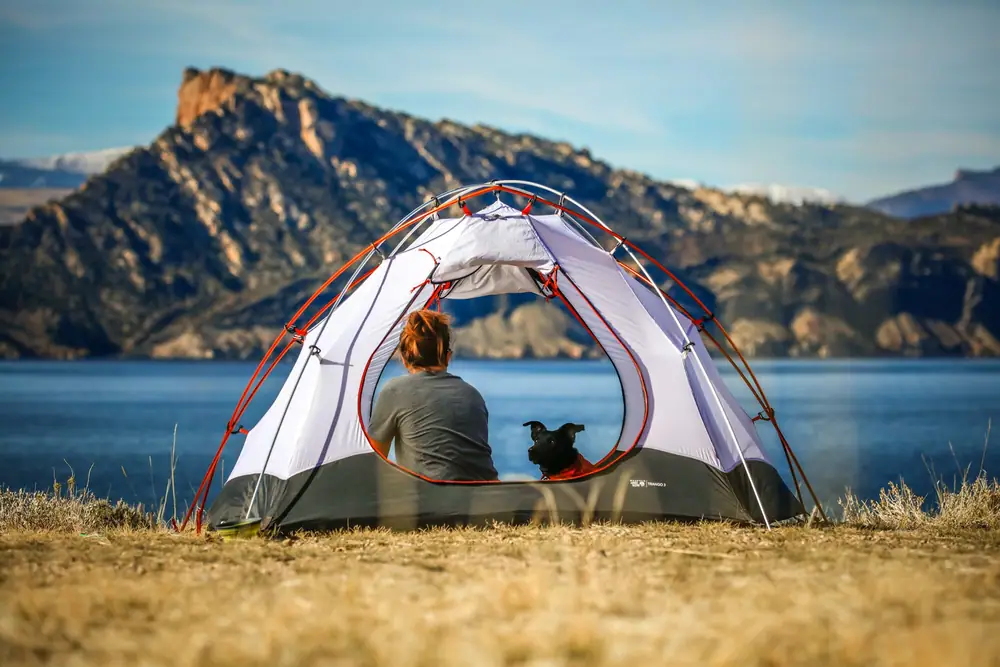
The most useful decision you can make is to keep the first trip modest. Pick a developed campground within a couple of hours of home, one where you can park next to your site and walk to a restroom and water spigot. Book two nights rather than one, and if you can, choose a weekend in late spring or early fall when the weather is mild and the campgrounds are calmer.
It can be tempting to aim for somewhere spectacular straight away: a remote lake, a mountain pass, a hike-in site with a view. Those trips are wonderful, and you will get there. But on trip one, you are learning a dozen small skills at once, from pitching a tent to keeping food cold to sleeping on the ground. A comfortable, forgiving campground gives you room to make small mistakes without them turning into big ones. Our guide to choosing a first campground walks through what to look for on the booking map.
02 — Gear: think in systems, not shopping lists
Camping stores are good at making beginners feel under-equipped. The truth is that a first trip needs surprisingly little, as long as a few core systems are covered. Can you stay dry? Can you stay warm, especially at night? Can you cook and keep food cold? Can you see after dark? Can you deal with a small cut or a blister? If the answer to each is yes, you are ready.
In practice that means a tent with a rainfly, a sleeping bag suited to the season, an insulated sleeping pad, a simple stove with fuel, a cooler, a headlamp for everyone, and layered clothing including a rain jacket and a warm hat. Add a basic first-aid kit, trash bags and a few comfort items like a camp chair, and you are well covered. The gear basics checklist lays this out system by system.
You also do not need to own all of it. Renting or borrowing the big items, especially the tent and sleeping bags, is a smart way to start. You get to learn what you like before spending money, and you avoid storing bulky gear you may use once a year. A sensible rule of thumb: buy small, personal things you will use every trip, like a sleeping pad and headlamp; rent or borrow the large, expensive things. We cover the details in rent or buy?
03 — The first night is about timing
If there is one piece of advice experienced campers repeat to newcomers more than any other, it is this: arrive with daylight to spare. Aim to have your tent pitched with at least two hours of light left. Pitching a tent you have never used, on unfamiliar ground, by headlamp, is how pleasant evenings turn stressful.
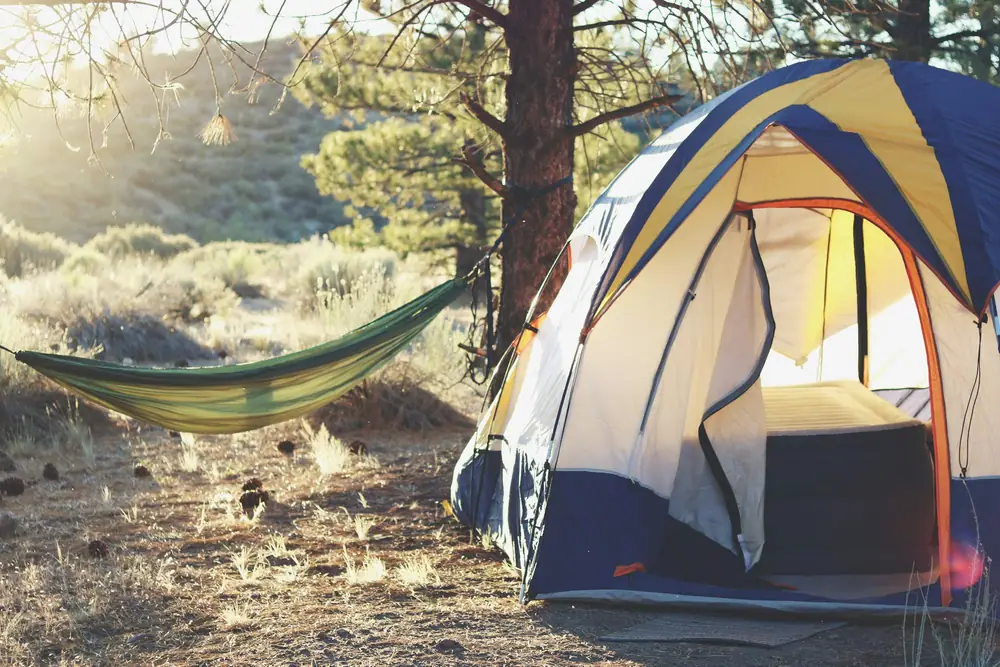
A good arrival order looks like this: check in, walk your site once to choose the flattest spot, pitch the tent, lay out sleeping pads and bags inside, then cook and eat while it is still light. Find the restrooms and water spigot before dark. Put food away before bed. By the time the sky goes dark, all the hard work is done and you can simply enjoy the evening.
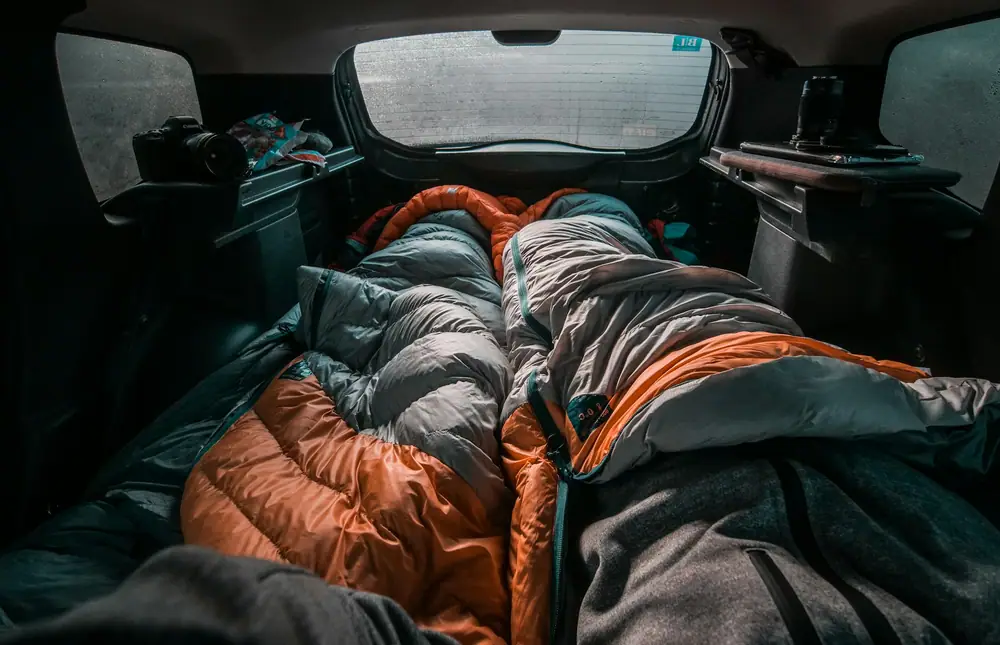
Before you zip up for the night, put four things within reach of your pillow: headlamp, water bottle, warm hat and a spare layer. Expect to wake once or twice. Night-time sounds are louder than you expect and a new surface takes getting used to. Earplugs are not cheating. The complete sequence is in the first-night checklist.
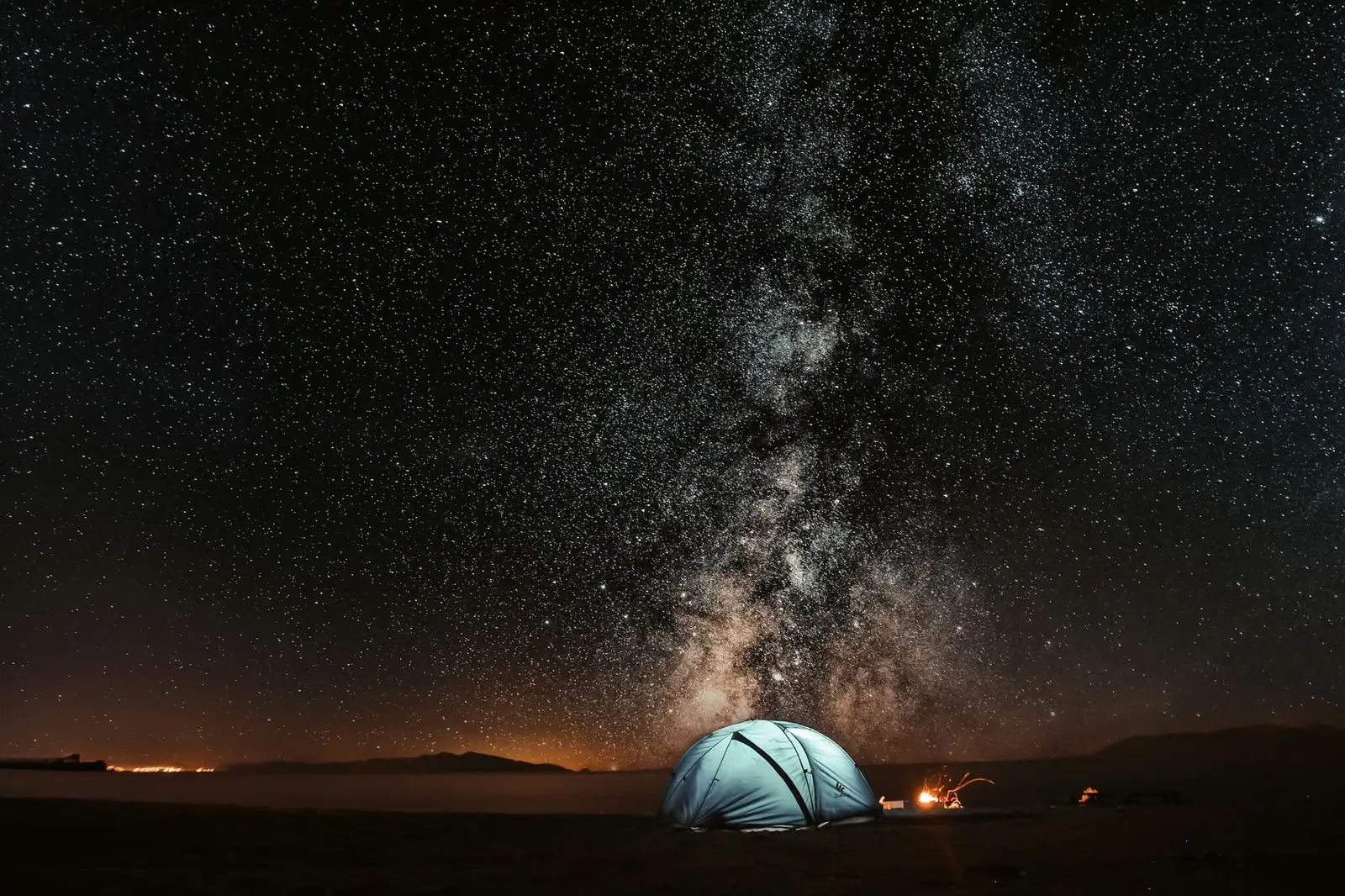
You do not need to be an outdoors person to go camping. You need a plan for the first evening and a warm place to sleep.
04 — Sleeping warm
Feeling cold at night is the most common first-trip complaint, and it is usually the ground's fault rather than the air's. When you lie on a sleeping bag, the insulation beneath you is crushed flat. What stops the ground from drawing heat away is the sleeping pad. That is why a proper insulated pad often makes more difference than a warmer bag, and why an ordinary air mattress can leave you chilly even in summer.
A few habits help a lot: change into dry clothes you only wear for sleeping, eat a warm dinner and a small snack before bed, wear a hat, and get into your bag already warm rather than already chilled. Keep a vent open to reduce condensation, since damp insulation is cold insulation. The whole topic is covered in why first-timers sleep cold.
05 — Weather: plan for the low, not the high
New campers tend to read the forecast like they would for a day out, looking at the daytime high. For camping, the more important numbers are the overnight low, the chance of rain, and the wind. Campgrounds in valleys, near water or at elevation can be noticeably colder at night than the nearest town.
Pack a rain jacket every time, whatever the forecast says. If rain is likely, bring a tarp and some cord to rig a dry cooking area, and pack clothes and sleeping bags in waterproof bags. If it will be windy, use every stake and guyline and keep the tent's low end facing the wind. Most importantly, agree on a turn-back rule before you leave: a clear condition under which you will pack up and go home. Leaving early on a first trip is not failure; it is good judgment. The weather prep checklist has condition-by-condition additions.
06 — Keep the kitchen simple
Camp cooking is one of the great pleasures of camping, but trip one is not the moment for ambitious recipes. Bring meals you already know how to make. A stew or chili cooked and frozen at home is ideal for the first night: it doubles as an ice pack in the cooler and only needs reheating. Oats and coffee for breakfast, wraps for lunch, pasta for night two.
Pack the cooler in reverse order of use, with the last meal at the bottom and snacks on top, and keep it in the shade. Wash dishes in two basins, one soapy and one for rinsing, and strain food scraps out of the water before disposing of it where the campground asks. Store all food and anything scented securely at night, following the campground's rules. The camp kitchen checklist has the full gear list and sample menus.
07 — Be a good neighbor
A campground is a shared space where people sleep close together with only fabric between them. The manners that make it work are simple: respect posted quiet hours, stay inside your site's boundaries, walk on roads and paths rather than through other people's sites, keep music low, and point lights at the ground. Water spigots are for filling containers, not washing dishes. Leave the restroom as you would want to find it.
Most of this is common sense once someone mentions it. We collected the posted rules and the unwritten ones in unwritten campground rules and the printable setup and etiquette checklist.
08 — Leave no trace, and leave it better
The seven Leave No Trace principles, published by the Leave No Trace Center for Outdoor Ethics, are a practical guide for anyone spending time outdoors. For a beginner at a developed campground, they boil down to a handful of habits: read the rules before you go, camp only on established sites, pack out every scrap of trash, leave natural things where you found them, keep fires small and in existing rings, watch wildlife from a distance and never feed it, and be considerate of other visitors.
Campfires deserve special care. Check current fire restrictions, buy firewood locally rather than bringing it from home, keep a bucket of water nearby, and never leave a fire unattended. When you are done, drown it, stir it, and drown it again until it is cold to the touch. The leave-no-trace checklist and campfire basics cover both in detail.
09 — After the trip
When you get home, set the tent up or drape it over chairs until it is completely dry, even if it looked dry when you packed it. Air out the sleeping bags. Then, while the trip is still fresh, write down three things: what you used and loved, what you never touched, and what you wished you had brought. That short note is the start of your own personal checklist, and it will serve you better than any list written by someone else, including ours.
Then pick a date for trip two. It is almost always easier, and usually a lot more fun.