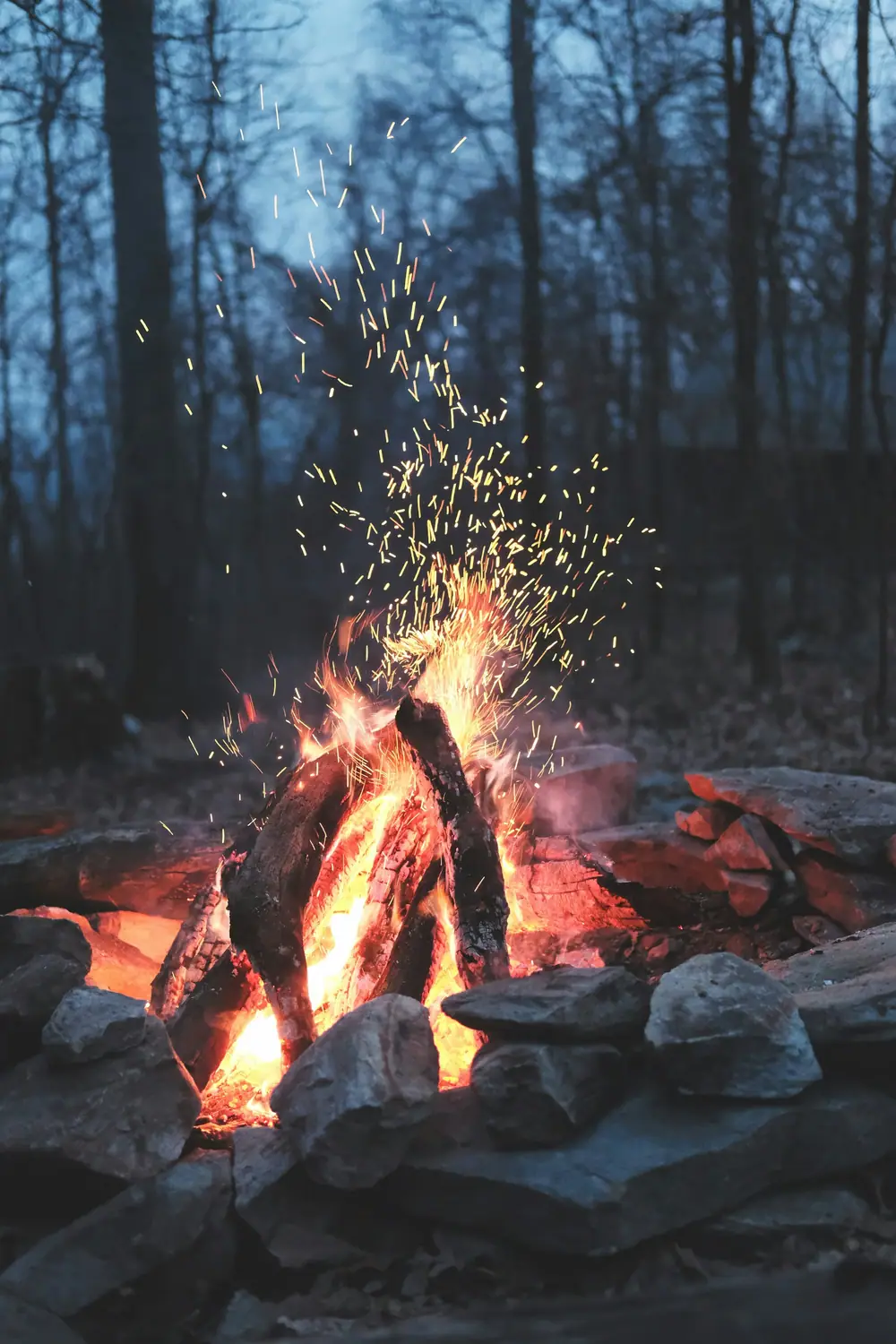
For many people, the campfire is the whole point of camping. It is where the evening slows down and conversation drifts. It is also the part of camping with the most responsibility attached. A careless fire can damage a campground, the forest around it, and in dry conditions far more than that.
The routine below is for a fire in an existing fire ring at a developed campground, which is where beginners should start.
Check the rules first
Fire restrictions change with the weather and season, sometimes from day to day. Before you pack any firewood, check the campground's website or call the office, and look at the bulletin board when you arrive. Restrictions might ban all fires, allow only gas stoves, or limit fires to certain hours. If there is a ban, the ring at your site does not mean fires are allowed.
Even without a ban, use common sense. On a hot, windy, dry day, a fire is a poor idea regardless of what the rules technically allow.
Firewood, tinder and kindling
Many areas ask campers not to transport firewood from home or from far away, because wood can carry insects and diseases that harm local forests. Buy wood from the campground or a nearby store instead. It is usually already split and dry.
A fire needs three sizes of fuel:
- Tinder: something that lights instantly. Dry grass, paper, or commercial fire starters.
- Kindling: small sticks about pencil-thick to thumb-thick. If your bought wood is all large logs, a few thin splits make good kindling.
- Fuel wood: the larger logs that keep the fire going.
Gather everything before you strike a match. A fire that goes out while you look for kindling is frustrating; one that goes out while you search in the dark is worse. Many campgrounds prohibit gathering wood, including dead wood from the ground, so check before collecting anything.
Building a small fire
- Clear the fire ring of trash and old debris. Check nothing flammable is within a few feet outside the ring.
- Place a loose ball of tinder in the center.
- Build a small teepee of kindling over it, leaving gaps for air and an opening on the side the wind is coming from.
- Light the tinder at the base through the opening.
- As the kindling catches, add slightly larger pieces, then one or two pieces of fuel wood.
- Keep it modest. A fire the size of a dinner plate to a small pizza is plenty for warmth and light.
Never use accelerants
Do not use gasoline, lighter fluid or stove fuel to start or revive a fire. Flare-ups are sudden and dangerous. If the fire will not catch, you need drier tinder or smaller kindling, not fuel.
Tending and cooking
Keep a bucket or large pot of water beside the ring the whole time the fire is lit. Never leave a fire unattended, even for a quick walk to the restroom; someone stays with it. Add wood one or two pieces at a time rather than piling it on. Keep chairs, jackets and shoes a sensible distance away, since sparks travel.
Cooking over a fire is easiest on coals, not flames. Let the fire burn down for 30 to 45 minutes until you have a bed of glowing embers, then use the grill grate. Flames blacken food on the outside while leaving it cold in the middle. For a first trip, cooking the main meal on your stove and saving the fire for toasting and warmth is a lot less stressful.
A small fire you can easily manage is warmer, calmer and far more pleasant than a big one you have to watch nervously.
Putting it out, completely
Stop adding wood about an hour before you plan to go to bed, so the fire can burn down to ash. Then:
- Drown the fire with water. Pour slowly to avoid a burst of steam and ash.
- Stir the ashes and embers with a stick to expose hidden coals.
- Drown again. Keep adding water and stirring until the hissing stops.
- Feel for heat by holding the back of your hand near the ashes. If you feel warmth, keep going.
The fire is out when it is cold to the touch. Not warm, not "mostly out". Do the same check before you leave the campground for the day and before you drive home. Covering a fire with soil alone is not enough, as embers can smolder underneath for hours.
Print-friendly checklists
Turn this into action with our six beginner checklists, each with a print button.