
Web Rental Fit · webrentalfit.com/checklists/camp-kitchen-checklist.html
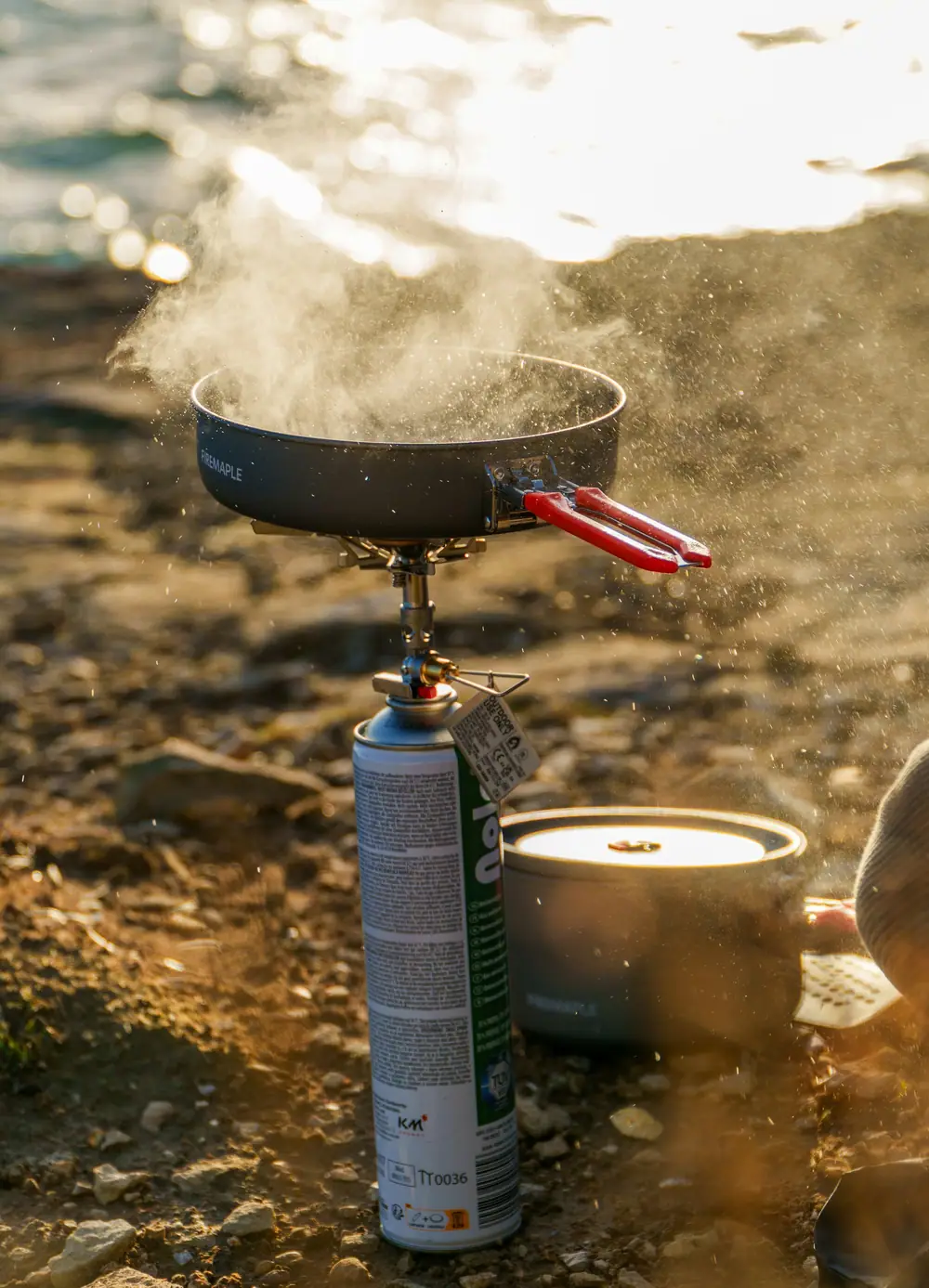
Cooking outdoors is one of the pleasures of camping, but it is also where beginners tend to overpack. You do not need a full kitchen. You need a reliable heat source, a couple of pans, a way to keep food cold and a way to clean up without leaving scraps behind.
This checklist assumes car camping with a picnic table and a water spigot nearby. Keep the kitchen gear together in one lidded tub; the tub doubles as a wash basin or storage box at camp.
Heat
Cookware
Eating
Cold storage
Clean-up
Food storage & wildlife
Packing the cooler so food stays cold
A cooler is a heat-leak box, and every time you open it warm air gets in. Pack it in layers in the order you will eat things. Frozen items and ice go at the bottom, the second night's dinner next, then the first night's dinner, and breakfast and snacks on top. Keep the cooler in the shade, cover it with a jacket or blanket, and do not drain cold meltwater until it starts to warm; it helps keep things chilled. Raw meat goes in sealed containers at the very bottom so it cannot drip onto anything else.
Three easy first-trip menus
| Meal | What to bring | Prep at home |
|---|---|---|
| Night-one dinner | Pre-made chili or stew, bread, grated cheese | Cook and freeze flat in a bag; it doubles as an ice pack |
| Breakfast | Instant oats, dried fruit, nuts, coffee or tea | Portion into single bags |
| Lunch | Wraps, hummus, hard cheese, crunchy vegetables | Wash and chop vegetables |
| Night-two dinner | Pasta, jar sauce, a vegetable, parmesan | Measure pasta into a bag |
Plan on plenty of drinking water too. Even at a campground with water spigots, a large jug at the table saves repeated walks and gives you water for cooking and doing dishes. If the water system is shut off, which some campgrounds do seasonally, you will need to bring all of it, so check before you go.
Cooking a meal you already know removes one variable from a day already full of new ones. Save the ambitious camp recipes for your third or fourth trip.
Doing dishes without leaving a trace
- Scrape plates into the trash bag while food is still soft.
- Wash in warm soapy water in the first basin, rinse in the second.
- Strain the gray water through a fine strainer and put the food bits in the trash.
- Dispose of the water where the campground asks, usually a sink or a designated drain. Never tip it into a lake or stream.
Stove safety in one paragraph
Cook outside the tent, on a stable surface, away from overhanging branches and the tent itself. Never run a stove or any fuel-burning heater inside a tent or closed vehicle; the carbon monoxide risk is real. Turn the stove off at the valve when you are done and let it cool before packing.