Campgrounds are one of the few places where strangers sleep a few dozen feet apart with only fabric between them. It works remarkably well, mostly because of a set of manners that regular campers share. New campers do not break these rules on purpose. They just have not been told.
So here is the telling, in a friendly way.
Rules that are posted
Every campground has an information board near the entrance, and many hand out a sheet at check-in. It is worth reading properly, because the rules differ from place to place. Common items include:
- Quiet hours, often somewhere around 10 p.m. to 6 or 7 a.m.
- Maximum people, tents and vehicles per site.
- Fire rules and any current restrictions.
- Food storage requirements, which can be strict in areas with bears.
- Pet rules, usually leash required and never left unattended.
- Check-in and check-out times.
- Generator hours, where generators are permitted at all.
The unwritten ones
Do not cut through other sites
A campsite is someone's temporary home, even without walls. Walking through it to reach the restrooms or the lake is like walking through a stranger's backyard. Use the roads and paths, even if it takes a minute longer.
Mind your headlamp
When you look at someone with a headlamp on, you shine it straight into their eyes. Switch to low or red mode around camp, and tilt the beam down when talking. The same goes for car headlights when arriving late: switch them off as soon as you are parked.
The quietest campers are not the ones who never talk. They are the ones who remember how far sound travels at night.
Sound carries further than you think
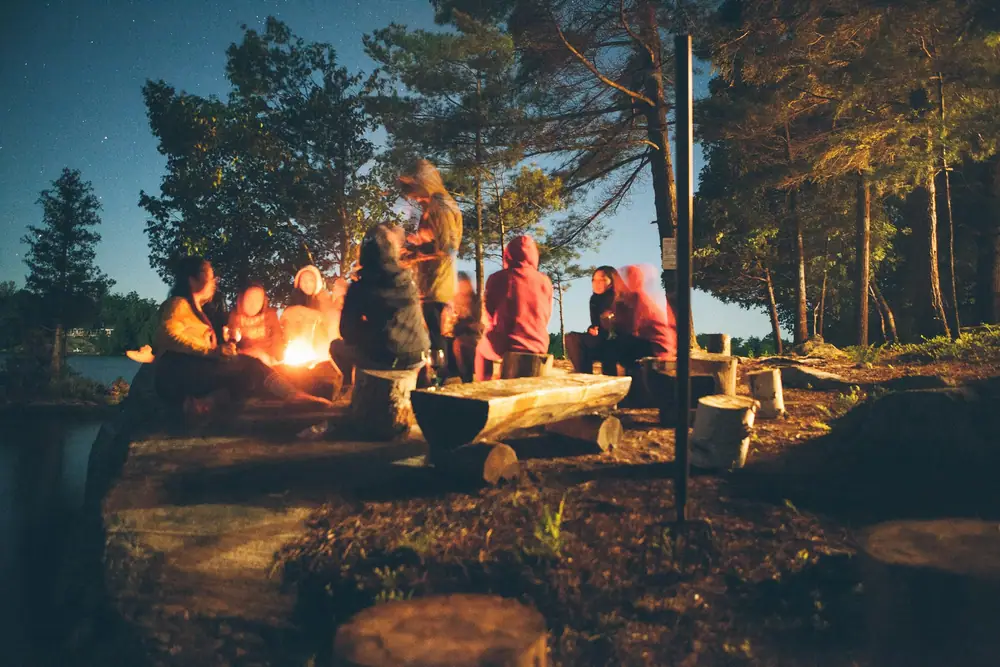
On a calm night, a normal conversation around the fire can be heard several sites away. Laughter, music and car alarms carry further still. Keep music low or use headphones, and remember that locking the car with a beep at midnight wakes people up.
Share the spigot
Water spigots are for filling containers. Washing dishes, brushing teeth or rinsing gear at the spigot leaves food bits and soap in a shared space. Fill a basin and carry it back to your site.
Arrive and leave gently
If you roll in after dark, set up with as little noise and light as possible. If you are leaving at dawn, pack most things the night before so the morning is quick and quiet.
Keep your space tidy
An untidy site with food out is more than an eyesore. It draws animals, which then visit your neighbors too.
A simple test
If you are unsure whether something is okay, ask: would I mind if the people next door did this at 11 p.m.? That usually gives you the answer.
Being friendly without intruding
Campgrounds are sociable places, and a wave or a "good morning" is almost always welcome. Many first-timers find experienced neighbors happy to share a tip or lend a spare tent stake. At the same time, people often go camping precisely for some peace, so read the cues. A short chat at the spigot is friendly; wandering over uninvited to someone's fire is usually not.
If you are camping with a group, you are responsible for its noise. Groups tend to be louder than they realize, especially as the evening goes on.
When something goes wrong
If a neighbor is loud during quiet hours, a brief, polite word usually works: most people simply did not notice. If you do not feel comfortable approaching, or if it does not help, contact the camp host or campground office. That is part of their role. Avoid confrontations late at night.
If you realize you have been the loud one, a short apology in the morning goes a long way.
The same applies to other small slips: a car door slammed at dawn, a lantern left shining into a neighboring tent, or a child who wandered through someone else's site. Acknowledge it, fix it, and move on. Most campers are forgiving of first-timers who are clearly trying.
In short
Read the board, stay inside your site, keep lights low and voices lower after dark, share facilities thoughtfully, and leave your site better than you found it. For a printable version of these habits, see the campsite setup and etiquette checklist.
Print-friendly checklists
Turn this into action with our six beginner checklists, each with a print button.